Tag: health

  • Mastering the Inner Debate: How to Choose Calm Over Chaos

    Mastering the Inner Debate: How to Choose Calm Over Chaos

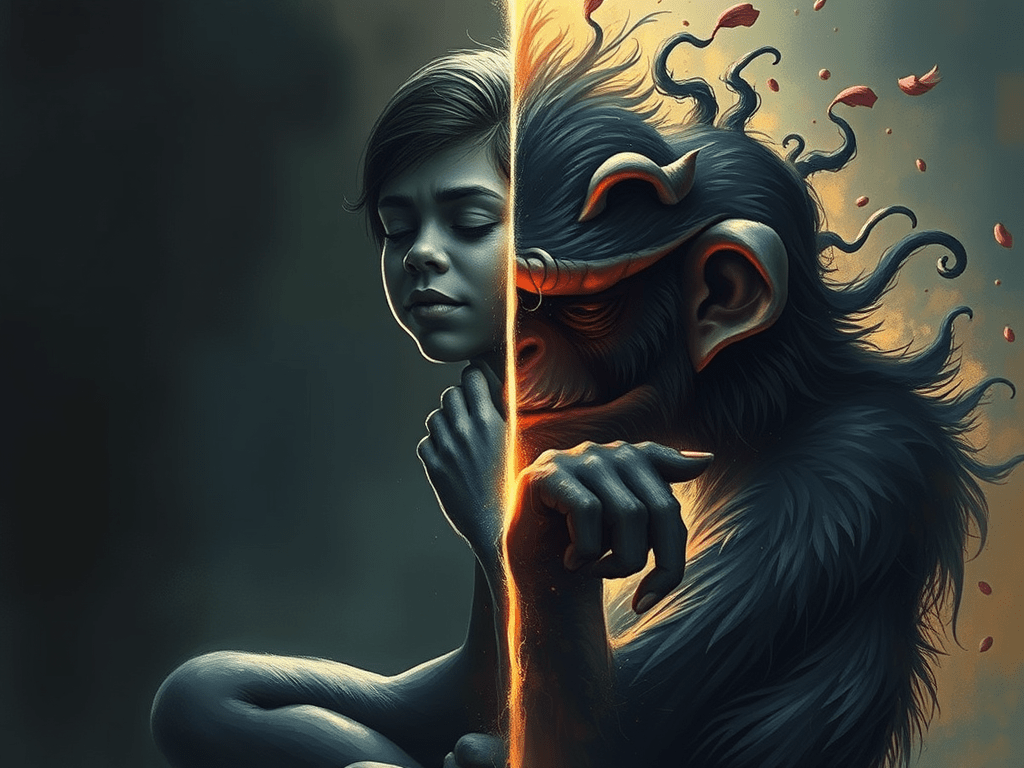
    If you’ve ever felt like two versions of you are arguing inside your own head, you’re not alone—and you’re not crazy.
    That’s just your Human and your Chimp having a moment.

    Picture this:

    You get invited to speak at an event.

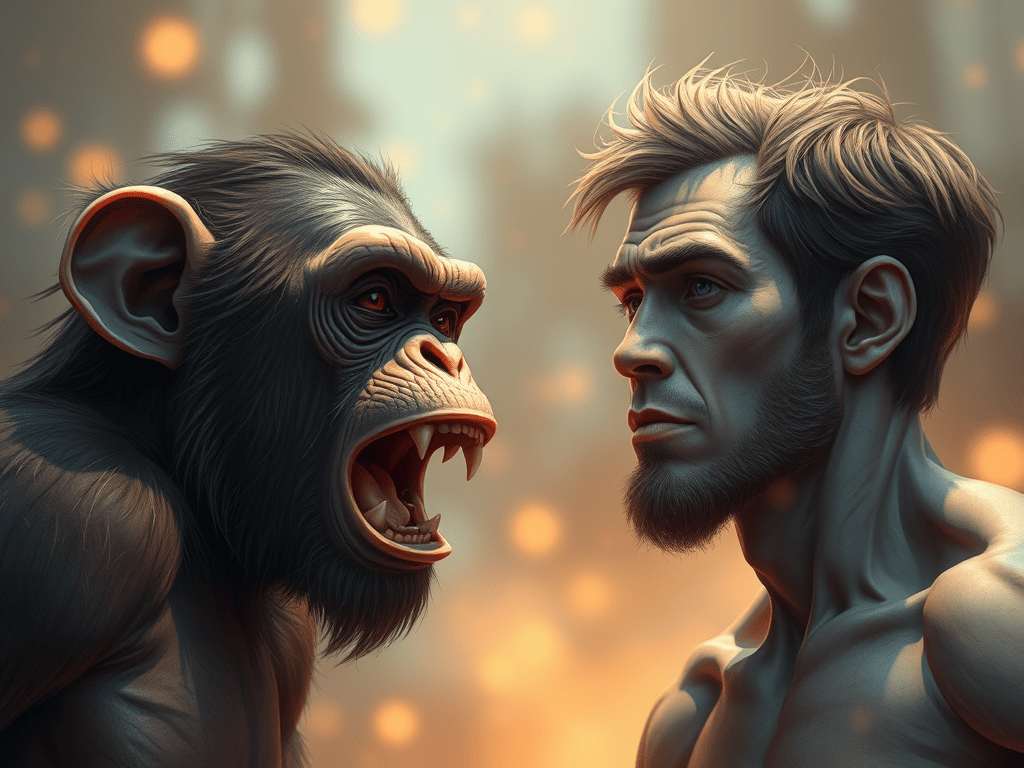
    • Your Human says: “This is a great opportunity. Let’s do it!”
    • Your Chimp chimes in: “Absolutely not. What if they laugh at you? What if you trip? What if you fail?”

    And suddenly, what started as excitement turns into a mental tug-of-war.

    Sound familiar?

    🧠 Meet the Human vs. the Chimp

    • The Human part of your brain is logical, calm, thoughtful.
    • The Chimp is emotional, reactive, and impulsive.

    They’re both you, but they speak different languages.

    The Human wants progress.
    The Chimp wants protection.

    One says, “Let’s grow.”
    The other says, “Let’s hide.”

    Neither is “bad”—they’re just operating from very different playbooks.

    🧍‍♂️ Living the Tug-of-War

    I can’t tell you how many times I’ve personally felt this inner debate play out.

    When I first started sharing my story—living with blindness, navigating self-doubt—I knew it mattered. I knew it could help people.
    But every time I was about to post, speak, or show up… my Chimp freaked out.

    “What if no one listens?”
    “What if they just feel sorry for you?”
    “You’re not ready for this.”

    Meanwhile, my Human whispered, “But what if this helps someone who needs it?”

    It’s a daily conversation—and I’ve learned that success doesn’t come from silencing the Chimp.
    It comes from learning how to pause, listen, and lead.

    🛠 What Should You Do When They Argue?

    Here’s what I’ve found helpful when the Human and Chimp go head-to-head:

    1. Recognize the Voice

    When a thought feels reactive, emotional, or fear-driven—name it:

    “That’s my Chimp talking.”

    2. Let the Chimp Vent

    The Chimp needs to be heard. Write it out. Say it aloud. Don’t shove it down. Give it space… then give it boundaries.

    3. Engage the Human

    Once the emotion passes, bring your Human to the table. Ask:

    “What would my calm, confident self say here?”

    4. Decide Who Leads

    Both parts get a say—but only one should get the final word. Choose your Human. Every time you do, you build trust in yourself.

    🧘🏽 Progress, Not Perfection

    The goal isn’t to be perfectly calm or logical all the time. That’s not real life.

    The goal is to know who’s speaking—and choose who leads.

    If the Chimp runs the show, life becomes reactive, anxious, and unpredictable.
    If the Human leads, you create space for peace, purpose, and progress.

  • From Fear to Friendship: Understanding Your Emotional Self

    From Fear to Friendship: Understanding Your Emotional Self

    In the last post, we met the Chimp—that impulsive, emotional voice inside your head that freaks out, overreacts, and sometimes sabotages your best-laid plans.

    But here’s something important to understand:

    Your Chimp isn’t crazy. It’s scared.
    And fear? That’s your Chimp’s full-time job.

    🛡 Why the Chimp Exists

    Let’s dive into a little brain science—but don’t worry, this is the simple, not-boring kind.

    Your Chimp lives in the limbic system, the part of your brain responsible for emotions, instincts, and the classic fight-or-flight response. It’s ancient—evolved to protect you from predators, famine, danger… and yes, even awkward elevator conversations.

    Its number one priority?

    Keep you alive.

    Not keep you happy.
    Not help you build your dream life.
    Just keep you alive.

    So when you feel triggered, anxious, or overwhelmed out of nowhere, it’s often your Chimp pulling the fire alarm. It sees risk where there might be none—and it reacts fast, because that’s how it’s wired.

    And here’s something else:
    If you live with disabilities, limitations, or setbacks, your Chimp reflex is often even quicker. It wants to protect you from getting hurt—emotionally, physically, socially.

    But in trying to shield you, it often keeps you small.

    🧍‍♂️ A Personal Perspective

    As someone who’s blind—and who’s faced both visible and invisible challenges—believe me, my Chimp has had years of training.

    That voice in my head that says:

    “Don’t put yourself out there.”
    “People will just feel sorry for you.”
    “You’re not enough.”

    Yeah, that’s my Chimp doing its job—trying to protect me from embarrassment, rejection, and pain.

    But here’s the thing:
    What protects you can also paralyze you.

    And if you’ve ever felt held back by fear, self-doubt, or that voice telling you to play it safe—your Chimp is doing the same to you.

    🧘🏽 So, What Do We Do About It?

    We don’t shame the Chimp.
    We don’t try to silence it.
    And we definitely don’t try to “logic” our way out of its grip—because logic doesn’t work on a Chimp in full meltdown mode.

    Instead, we acknowledge it.
    We thank it.
    We take a breath and say:

    “I hear you. But I’ve got this.”

    Managing your Chimp is about building a relationship, not waging a war.

    Especially if you’re dealing with a disability or hardship, fighting the Chimp head-on can feel impossible. And honestly, it’s too strong to overpower. So don’t try to kill it—tame it. Learn to walk with it. Because believe it or not, your Chimp is still a valuable part of your mindset when it’s trained right.

    💬 Your Challenge Today

    The next time your heart races, your mind spirals, or you feel like running away—pause.

    Ask yourself:

    “Is this my Chimp trying to protect me?”

    You might be surprised how often the answer is yes.

    Because while your Chimp isn’t always rational, it is trying to keep you safe. And when you understand that, you can start showing up for yourself with patience, self-compassion, and clarity.

  • Reclaiming Your Power: Understanding the Emotional Mind

    Reclaiming Your Power: Understanding the Emotional Mind

    🧠 Let’s Be Honest: Sometimes It Feels Like We Have Two Brains

    Let’s start with a truth most people won’t say out loud:

    Sometimes, I feel like I have two brains—and one of them is slightly unhinged.

    You ever find yourself saying something you instantly regret? Or panicking about something that logically doesn’t even matter? Or maybe you’re calm one second… and irrationally angry the next?

    Well, welcome to your inner jungle.

    Because The Chimp Paradox by Dr. Steve Peters explains that you’re not crazy—you’re just human. And part of being human means sharing your headspace with a wild, emotional machine called the Chimp.

    🐒 So, What Is the Chimp?

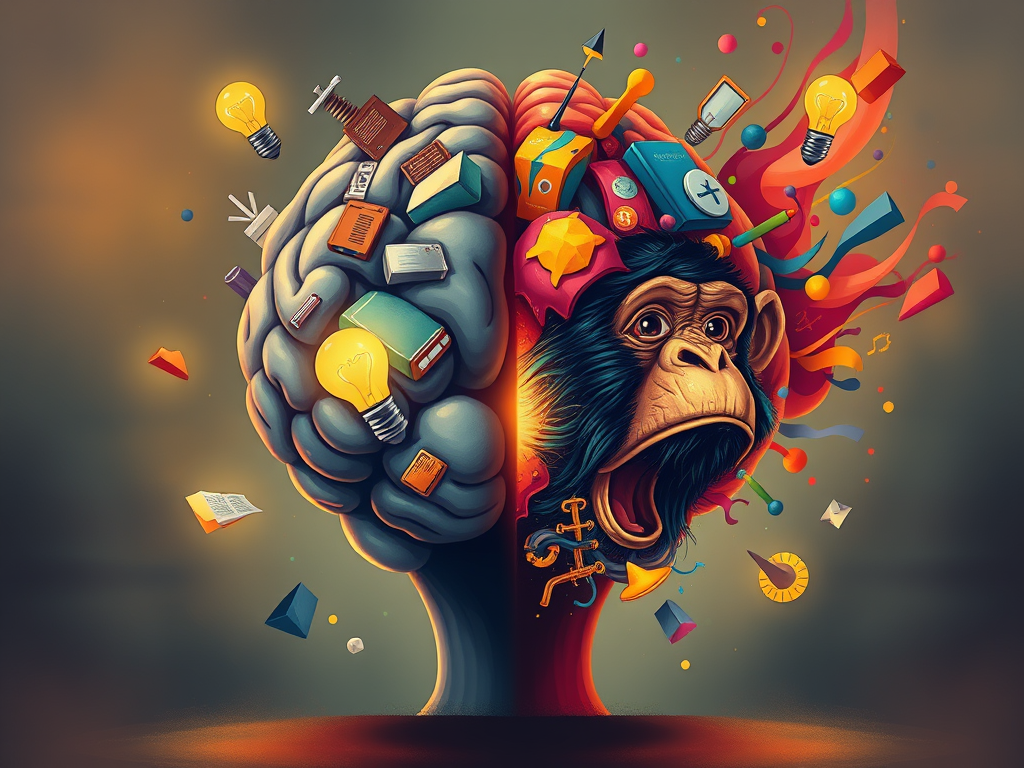
    According to Peters, your brain has three key players:

    1. The Human – the logical, rational, thoughtful you
    2. The Chimp – your emotional, impulsive, fight-or-flight brain
    3. The Computer – your memory bank, habits, and auto-responses

    The Chimp isn’t bad—it’s just not always helpful. It was designed to protect you, to sense danger, to react quickly. The problem is… it can’t tell the difference between a lion chasing you and a slightly passive-aggressive text message.

    So while your Human might be calmly thinking, “Let’s have a mature conversation,”
    your Chimp is already screaming, “RUN. HIDE. DELETE THEIR NUMBER.”

    Sound familiar?

    🌱 Why This Matters

    We often beat ourselves up for our anger, fear, anxiety—or any emotion that feels “too much.” But those reactions aren’t signs of weakness. They’re signs of an untamed Chimp running the show.

    That inner beast—the one that panics, lashes out, or tells you you’re not good enough—isn’t trying to ruin your life. It’s trying to protect you.

    If we don’t acknowledge, understand, and learn to manage the Chimp, it will continue to control our thoughts, behaviors, and decisions. It’s the same Chimp that says you can’t do something because of a limitation, disability, or past failure.

    But here’s the key:
    To break free from the Chimp’s grip, your Human self has to get back in the driver’s seat.
    It’s not about shutting the Chimp down—it’s about taming it.

    💡 A Personal Note

    So when you’re blind like me—or living with a disability, a limitation, or just some heavy life challenges—that inner voice that whispers:

    “You can’t.”
    “You’re not ready.”
    “It’s safer to stay small.”

    Yeah, that’s your Chimp talking.

    It might sound harsh, but it’s not trying to hurt you—it’s trying to protect you from pain, failure, embarrassment, or rejection. That voice is rooted in fear, not truth. And recognizing that is step one.

    For today, just notice the voice. Don’t fight it.
    Simply acknowledge it and say:

    “Hey Chimp, I see you. But I’ve got this.”

    It’s not crazy—it’s human.
    And in the next blog post, we’ll dive deeper into why your Chimp acts this way and how to calm it without losing your mind in the process.

  • You Are the Product: How to Sell Yourself Without Selling Out

    You Are the Product: How to Sell Yourself Without Selling Out

    We might roll our eyes every time a telemarketer calls—but let’s be real: in some way, we’re all doing the same thing. Maybe not cold-calling strangers 100 times a day, but every day, we’re selling ourselves.

    Think about it. In a job interview, we’re pitching our skills and experience. On a date, we’re showcasing our best selves. At a networking event, church, or even standing in line at the DMV—we’re presenting who we are through how we talk, how we dress, how we carry ourselves.

    And don’t even get me started on social media. Every post, every caption, even this blog is part of how I “sell” my mindset to the world.

    But here’s the truth:
    You can’t sell yourself if you don’t believe in yourself.

    You are a walking, talking reflection of your inner world. If you don’t believe you’re good enough, chances are no one else will either. The deal won’t close—not because you’re not worthy, but because your self-belief didn’t show up to the meeting.

    Yes, I take some inspiration from sales tactics. Not the sleazy stuff—but the deeper truths. Because being a great salesperson isn’t about manipulation. It’s about understanding yourself, connecting with others, and knowing your value.

    This all comes down to mindset—the one I try to live by and encourage here:
    🧠 Understanding. Acknowledgment. Acceptance. Growth.

    If you “fail to close the sale”—that’s okay. The beauty is, you are the product. That means you can evolve, refine, and come back better. Failure isn’t the end. It’s just market feedback.

    Believing you’re already perfect and never need to change? That’s not confidence—that’s ego in disguise. Real confidence includes self-reflection and a willingness to grow.

    Even when we bring our best game, the work isn’t done. We still have to show up, hit the gym (physically or mentally), and do the reps. Whether you’re coming off an MVP performance or a night you’d rather erase from memory, the key is the same:
    Show up. Do the work. Keep growing.

    That’s what it means to sell yourself—not with desperation, not hoping others feel sorry for you, but with grounded confidence. You attract what you believe you deserve. Someone once gave me a hard truth:

    “You’ll never get anywhere by making people feel sorry for you.”

    And they were right.

    So stand tall. Own your story. Do the inner work.
    Be your own best closer. Because the deal you’re making? It’s the one that shapes your life.

  • The Squid Game of Life: Why Everything We Do Is a Choice

    The Squid Game of Life: Why Everything We Do Is a Choice

    We all have choices.
    Everything we do—everything we are—is a choice.

    I genuinely believe that.
    A perfect (and oddly powerful) example of this comes from the hit Korean Netflix series you’ve probably heard of—Squid Game.

    Honestly, I wasn’t too excited about the show when it first came out. I thought it was just another violent, overhyped series. I didn’t actually watch it until the last two episodes of the final season dropped. But once I did… wow.

    Yes, there’s blood. Yes, there’s death. But beneath all the brutality, Squid Game dives into the deep, dark waters of human nature—and more importantly, human choice.

    One of the recurring messages that stuck with me is this:

    As humans, we always have a choice.
    Who we are, how we live, what we accept—these are not fixed. They are choices. Even when it doesn’t feel like it.

    Now, sure—we all tell ourselves stories.
    Why things turned out the way they did.
    Why we’re stuck.
    Why it’s too late, too hard, or just not meant for us.

    But when you watch that show, you see it play out clearly: the characters chose to keep playing. Even knowing the risk. Even knowing the outcome could be tragic. Over and over, they made the choice to stay in the game.

    And isn’t that kind of like real life?

    We say, “I have no choice—I have to go to work so I can pay the bills.”
    Or, “I’m blind, so I can’t go out and meet people or be a productive member of society.”
    Or, “I have too much going on—I can’t keep in touch with friends or make time for family.”

    But if we’re being honest, those aren’t facts—they’re choices.
    They’re the stories we tell ourselves to justify staying comfortable or staying small.

    Even God gave us free will.
    We get to decide—every single day—who we’re going to be.
    Saying, “That’s just how I am,” or “I can’t change,” is just another way of opting out. A smoother path, sure—but it leads nowhere fast.

    In Squid Game, the players often knew what was right.
    They just let fear, desperation, greed—or excuses—get in the way.

    And the truth?

    The right choice is rarely easy.
    But it’s still yours to make.

    Now, don’t get me wrong—I’m not saying you need to be the next superhero who sacrifices everything for the greater good (though kudos if you’re up for it).
    Most of life isn’t a blockbuster drama.
    But your life does have high-stakes decisions—some big, some small—that shape your entire story.

    And that brings me back to the point:

    We all have the choice to live a great and fulfilling life.
    Even if it requires us to look past our excuses, limitations, distractions, and doubts.

    No one promised the road would be smooth. In fact, it’s often full of potholes and detours.
    But the path?
    It’s always there.

    For me, yes—I’m blind.
    Some roads are blocked. Some doors are locked.
    But that doesn’t mean the journey ends.
    It just means I have to loop around, take a different route, maybe ask for directions or grab a walking stick (or GPS).
    And sometimes, the new route is even better than the one I planned.

    But first—I have to choose it.

    So do you.